Due to the large amounts of fresh snow, caution is necessary!
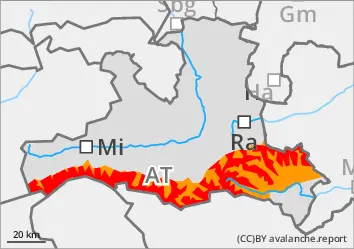
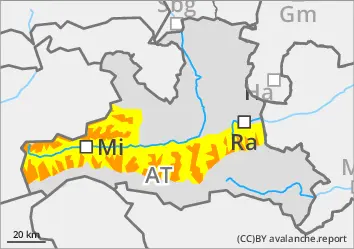
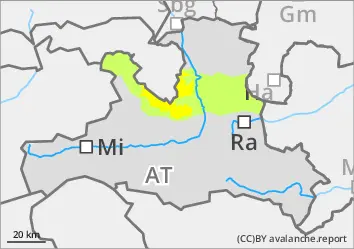
Large amounts of fresh snow in the Hohe Tauern, critical avalanche situation especially above 2200 metres.
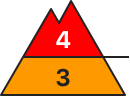
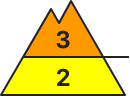
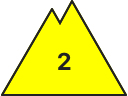
The avalanche danger is high above 2200 m, and considerable below that. Slab avalanches can occur spontaneously in all exposures or be triggered by a small additional load and become large. The number of danger spots increases significantly with altitude, while at the same time they are difficult to recognise due to the increasing coverage of fresh snow.
Snowpack
dp.6: cold, loose snow and wind
The large amounts of fresh snow of the past 24 hours are lying on an unstable old snow foundation, consisting of several thin crusts with layers of angular crystals in between as well as a surface layer that is prone to disruption. Fresh, weak layers that are prone to disturbance can also be found in the new snow pack. locally fresh drift snow has formed, which is temporarily easy to disturb and is covered by new snow, especially at altitudes above 2200 metres.
Tendency
After the end of the snowfall, spontaneous avalanche activity decreases rapidly, but the snowpack can still be easily disturbed by additional loads.
Danger level
1600m
Avalanche Problem
Wind slab
1600m
Persistent weak layer
Fresh drift snow that is susceptible to disturbance is easy to disturb
The avalanche danger is considerable above 1600 metres and moderate below that
Fresh drift snow packs are easily triggered by winter sports enthusiasts, slab avalanches can also become large in some places. The number of danger spots increases significantly with altitude, but caution must also be exercised in forest areas. Even at lower altitudes, there are still a few danger spots in old snow, which are mainly located at the transition from a little to a lot of snow. Slab avalanches in old snow usually remain small, but can also reach medium size.
Snowpack
Surface frost layer susceptible to interference
Angular crystals at the transition from the old snow foundation to the drift snow
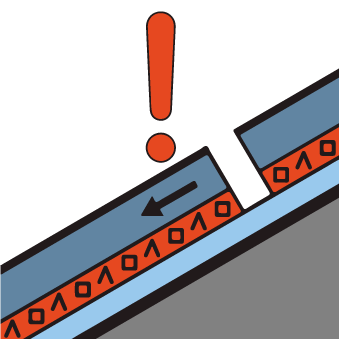
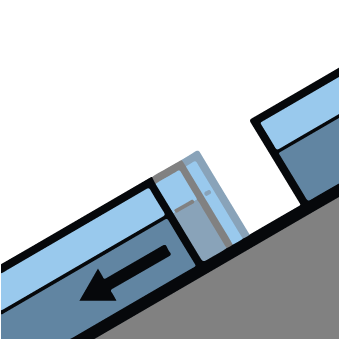
On steep grass mat terrain, the entire snow cover can slide off.
Weak layers in the drift snow consisting of loose layers of fresh snow
Moisture penetration of the snow cover increases over the course of the day
The snowpack foundation consists of large cup crystals.
Tendency
As the snow packs warm up, they quickly bond with the old snow surface and the susceptibility to disturbance decreases.
Danger level
Avalanche Problem
Wet snow
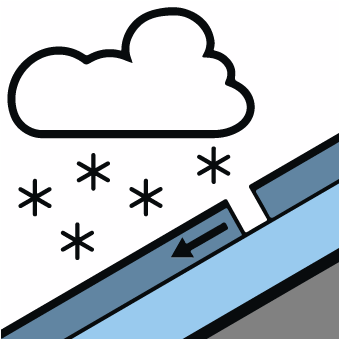
Gliding snow
2400m
test
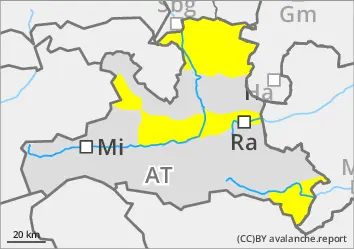
The avalanche risk is moderate. Sliding and wet snow activity will increase due to the increasing moisture penetration. Loose wet snow avalanches can be expected from very steep terrain in all exposures with increasing moisture penetration during the course of the day. Avalanches can occasionally become medium-sized. Sliding snow avalanches can occur spontaneously from steep grass mat terrain. The sliding snow avalanches usually remain small, from higher and snowier areas they can also reach medium size. Above around 2400 m, fresh drift snow accumulations are occasionally prone to failure, especially on very steep shady slopes. They can be triggered by even small additional loads. Avalanches usually remain small.